


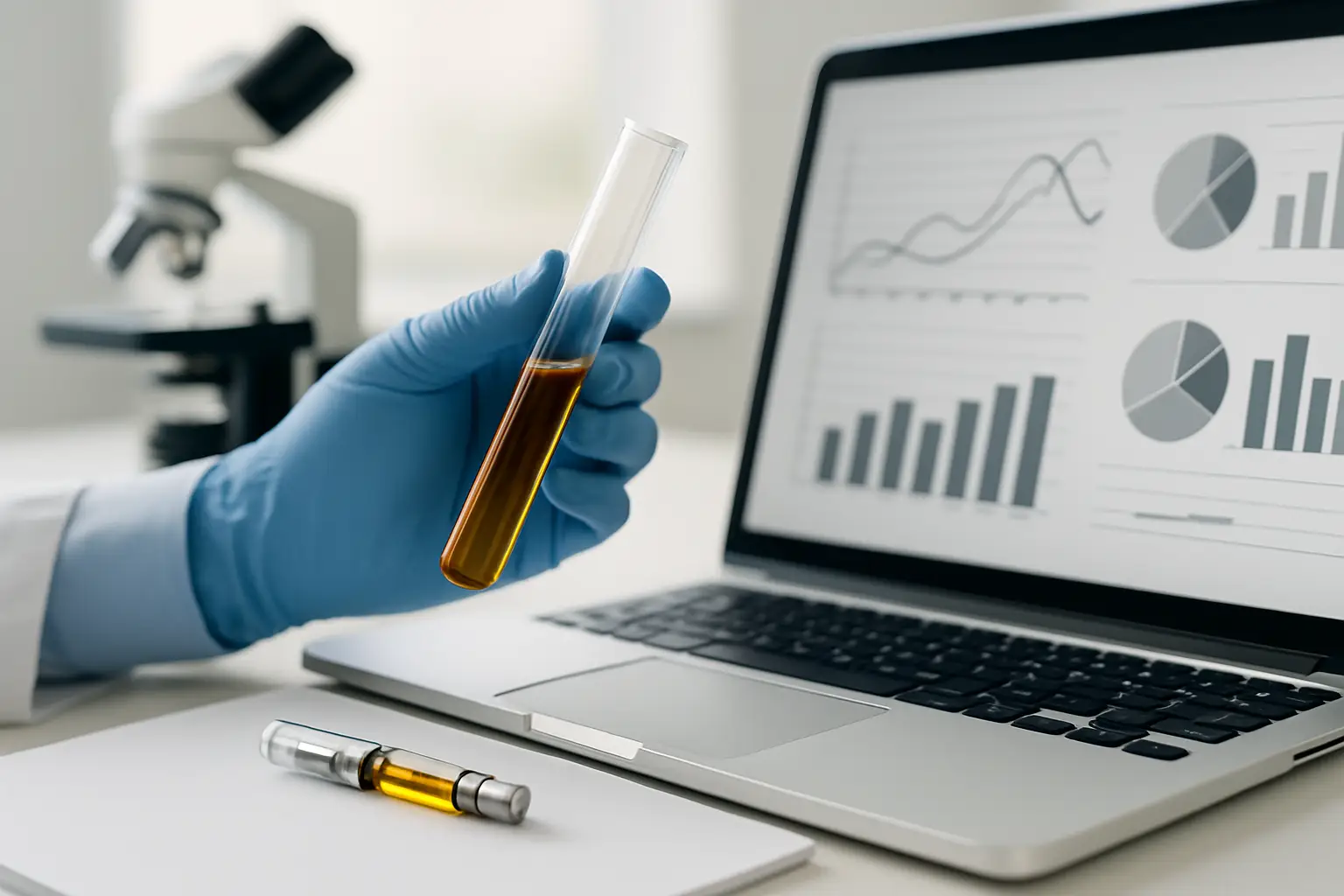
You can tell when a cart hits right: flavor is clean, the pull is smooth, and the effect is consistent. What you cannot tell from one hit is whether the oil inside was actually screened for the stuff you do not want in your body. That is where lab test results earn their keep.
If you are shopping online, “lab tested” is a phrase you will see everywhere. The difference is in the details. Real reporting makes it easier to verify what you bought, compare batches, and avoid counterfeits and low-quality oil dressed up in loud packaging. This guide breaks down clean carts lab test results in plain English so you know what to look for, what can be skipped, and what should make you walk away.
What “clean carts” lab test results should cover
A legitimate vape lab report is usually called a COA, short for Certificate of Analysis. It is typically tied to a specific batch or lot, not a vague “we test everything” promise. Think of it as a receipt for quality and safety checks, not a marketing graphic.
At a minimum, clean carts lab test results should answer three questions: What is in the oil (potency and cannabinoids), what gives it its flavor (terpenes, if listed), and what is not in it (contaminants). Some brands publish a tight, easy-to-read panel. Others share multi-page lab PDFs. Either can be fine if it is current, batch-specific, and complete.
Potency: more than a big THC number
Potency is the first thing most people scan, and it is the easiest thing for bad actors to inflate. A proper potency panel lists individual cannabinoids and totals. You might see Delta-9 THC, THCa (more common in flower testing but sometimes present), CBD, CBG, CBN, and a few others depending on the formulation.
Here is the trade-off: higher potency can feel stronger, but it does not automatically mean a better experience. Super-high THC with a flat terpene profile can taste harsh or one-note. Some people prefer slightly lower THC with better flavor balance and smoother pulls. Potency is still important – just treat it like one part of the story, not the whole story.
Terpenes: why the flavor feels “real”
Not every COA includes terpene testing, but when it does, it is a useful credibility signal. Terpenes are the aromatic compounds that shape flavor and can influence how the experience feels for different users.
If terpenes are listed, you are looking for a profile that makes sense for the flavor claim. A fruit-forward product usually leans bright and aromatic, while dessert-style profiles tend to read sweeter and heavier. What you do not want is a report that looks copy-pasted across every flavor or a terpene total that feels disconnected from the category. There is no single “perfect” terpene percentage, but consistency within a brand’s lineup is a good sign.
Contaminants: the part you should not compromise on
This is the heart of clean carts lab test results. A cart can taste great and still be contaminated. A strong report screens for common risk categories and clearly states pass or fail.
Heavy metals
Heavy metal testing matters because hardware and processing can introduce contamination. Typical panels include lead, arsenic, cadmium, and mercury. You want results that show these are below the lab’s action limits, with a clear pass.
Pesticides
Pesticide panels can be long. That is normal. The key is that the report identifies the method, lists analytes tested, and shows non-detect or below limit numbers where appropriate. If a report is missing pesticides entirely, that is not a small omission in a vape category.
Residual solvents
If the oil is produced using extraction methods that involve solvents, residual solvent testing is a must. A clean report shows the remaining levels are below thresholds. If you see elevated solvent numbers with a pass that feels questionable, that is a time to ask questions.
Microbials and mycotoxins
Even though oil is not the same as flower, microbial testing can still show whether the source material and processing were handled properly. Mycotoxins (toxins produced by certain molds) are another common panel. A good COA makes these results easy to find.
Cutting agents and additives
The category has learned some hard lessons here. If a product uses any additives, you want transparency. Some labs will include targeted screening for certain compounds used to alter viscosity. If a brand emphasizes “clean,” the reporting should match that stance.
How to read a COA without getting lost
A COA can look technical, but you only need a few checkpoints to make it useful.
Start with the basics. The product name should match what you are buying, and the batch or lot number should be present. Dates matter: look for a test date that is recent enough to reflect current production. Old reports reused for new inventory are one of the most common trust-breakers.
Next, check the lab identity. A real lab name, contact information, and accreditation details should be visible. If a report looks like a screenshot with no lab header, no signatures, or missing method information, treat it as unverified.
Then scan for “LOQ” and “LOD.” These are the limits of quantitation and detection. They tell you how sensitive the test is. A “non-detect” result is only meaningful if you know what the lab could actually detect.
Finally, look for a simple pass/fail summary plus the raw numbers behind it. A summary without data is not enough, and raw numbers without an interpretation can confuse customers. The best reports show both.
Red flags that should stop you from buying
If you have been shopping carts for a while, you have probably seen at least one of these. They are common because they work on people who are moving fast.
One red flag is a COA that does not match the product. The strain or flavor name is different, the batch number is missing, or the cannabinoid totals do not align with what is advertised.
Another is “lab tested” with no report. If you cannot access the results, you are being asked to trust a claim without proof. That might be fine for low-risk purchases. For inhalables, it is not.
Watch for duplicate reports across multiple flavors or SKUs. If everything shares the same exact cannabinoid breakdown and the same terpene list, the brand may be recycling documentation.
Also be cautious with reports that only show potency. Potency-only testing is not a cleanliness promise, and it does not protect you from contaminants.
Verification: clean carts lab test results should connect to the package
The practical reason you want lab testing is not just safety – it is authenticity. Counterfeits are a real issue in the disposable and cartridge world because packaging is easy to copy and people love “too good to be true” deals.
The strongest verification loop is simple: the package has a batch identifier or QR code, the QR resolves to a batch-specific COA, and the product details line up. If you scan and land on a generic homepage with no batch information, that is not verification. It is a redirect.
If you are buying for a group, buying bulk, or stocking inventory as a reseller, this matters even more. One bad batch creates customer complaints, refund demands, and reputational damage. Clean carts lab test results are not just paperwork – they are risk control.
What results should look like for a premium disposable
Premium does not mean “highest number on the page.” Premium means consistency: the device performs the same from first pull to last, the flavor stays stable, and the oil does not feel rough or unpredictable.
Lab results cannot directly prove device performance, but they do support the inputs that affect it. Cleaner oil with clear contaminant passes and sensible formulation choices usually correlates with smoother use and fewer unpleasant surprises.
It also depends on your tolerance and what you buy for. If you want strong effects, you will care more about potency totals and batch consistency. If you are flavor-driven, terpene reporting and overall formulation transparency will matter more. If you are sensitive to harshness, contaminant screening and additive transparency rise to the top.
How we think about testing and trust
At CleanCarts.shop, we treat lab testing and verification as part of the product experience, not an afterthought. If you are shopping premium disposables or edible chews online, you deserve to know what you are buying, confirm it is authentic, and feel protected if anything shows up off.
That is why the best buying habit is simple: make lab results a requirement, not a bonus. When you train yourself to check batch details and contaminant panels the same way you check flavor and potency, you stop gambling with your order.
A final thought to keep you sharp: if a brand ever makes you feel weird for asking to see clean carts lab test results, that is your answer. Buy from the company that is proud to show the receipts.How to verify product
[…] times, not just delivery speed. Look for tracking that updates quickly after purchase. Look for packaging and authenticity language that feels operational, not […]