


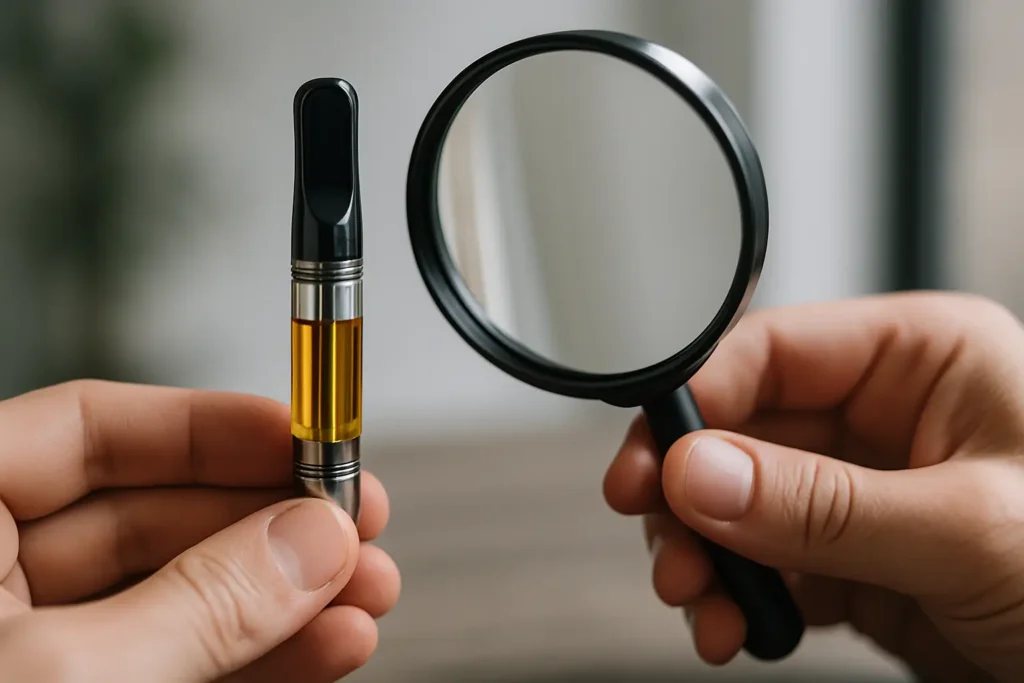
You already know the feeling: the cart shows up, the flavor name sounds perfect, and you want to rip it immediately. That is also the exact moment counterfeiters and sloppy suppliers count on. If you care about potency, taste, and a device that actually performs like it should, verification is part of the ritual – not an extra step.
This is how to verify clean carts without turning your kitchen into a lab. You are going to look at the packaging, the product ID and testing, the oil itself, and the hardware performance. None of these checks alone is a magic shield. Together, they catch most of what people call “fake,” “dirty,” or just plain low-quality.
What “clean” really means (and what it doesn’t)
“Clean” gets thrown around to mean everything from “tastes good” to “won’t clog.” Here is the more useful definition: a clean cart is oil that is what it claims to be, produced with proper inputs and processes, and supported by current third-party lab testing – plus hardware that is safe, consistent, and not likely to burn or leak under normal use.
That does not mean a cart will never clog, or that every strain will look identical, or that your tolerance will not vary day to day. It also does not mean you can visually confirm pesticides or heavy metals. Verification is about reducing risk by confirming authenticity signals and catching obvious red flags before they become your problem.
How to verify clean carts starting with the order
Verification starts earlier than most people think. The cleanest product in the world can still become a bad experience if it was shipped hot, handled poorly, or sold through an account that cannot stand behind it.
Buy from a source that offers straightforward support and a real replacement or refund path. If the seller makes you jump through hoops, that is a signal. If the seller cannot tell you how to confirm authenticity, that is also a signal.
A brand that builds verification into the shopping experience tends to be the brand that expects you to check. That is why shoppers who prioritize assurance usually stick with a direct-to-consumer retailer that treats authenticity like a feature, not a footnote, like CleanCarts.shop.
The packaging check: fast, boring, and extremely effective
Counterfeits usually fail the basics first. Before you even open anything, inspect the outside like you are looking for tampering.
Start with seals. A legitimate product should arrive with intact outer packaging and a consistent seal strategy. If you see torn shrink, crooked seals, glue residue, or a box that looks re-closed, pause. A clean cart does not require perfect aesthetics, but it does require packaging that makes sense.
Then look at print quality and consistency. Blurry fonts, washed-out colors, mismatched logos, or a flavor name that does not match what you ordered are common fake tells. Counterfeiters often get close, but not exact, and you are looking for “off” details that suggest the packaging was recreated.
Finally, check for required identifiers. Most reputable producers include batch or lot information, a production date, and some kind of scannable verification element. If there is no way to identify the unit or batch, you have nothing to verify.
QR codes and lab results: what to scan, what to ignore
A QR code is only useful if it points to the right information. Lots of bad products have QR codes. Your job is to confirm the code actually resolves to results that match what is in your hand.
When you scan, you want to see a COA (Certificate of Analysis) from a third-party lab with a batch number that matches your packaging. Potency should make sense for the type of oil, and the report should include contaminant screening that fits the product category. The exact panel varies by state and supply chain, but the spirit is the same: you want more than a single THC percentage screenshot.
Watch for these common problems:
A QR code that leads to a generic homepage, a dead page, or a document that has no batch reference. That is marketing, not verification.
A COA that looks reused. Same date for multiple “batches,” identical numbers across different flavors, or a report that does not match the product type are signs someone is recycling paperwork.
A report that is too thin. If all you get is potency and nothing else, you have not verified “clean.” You have verified a number.
If the batch number on the COA does not match your unit, treat the verification as failed. It might still be fine, but you cannot confirm it.
Oil cues: what your eyes can tell you (and what they can’t)
Visual inspection is not science, but it is still valuable. You are looking for consistency and obvious defects.
Color should be believable for the oil type. A wide range is normal, but sudden extremes can be suspicious, especially if you expected a specific style. Clarity matters too. Hazy oil can happen for multiple reasons, including temperature changes, but cloudiness with particles is a hard stop.
Bubbles tell a story. A few tiny bubbles after shipping or handling are normal. Large bubbles that never move, foaminess, or separation layers can indicate formulation issues or improper mixing.
Viscosity matters. Oil that is extremely thin can point to cutting agents or a formulation that may not vape cleanly. Oil that is extremely thick can struggle to wick and can burn if you chain-hit it. “Clean” is not just about purity. It is also about oil that is engineered to perform predictably in a disposable.
Smell is another cue. Before the first hit, take a quick, cautious sniff from the mouthpiece area once opened. If you get harsh chemical notes, solvent-like fumes, or anything that feels irritating, do not push past that instinct.
Hardware inspection: the part most people skip
A clean cart experience can be ruined by bad hardware even if the oil is legit. With disposables, you are verifying the entire device: battery, airflow, heating element, and seals.
Look for oil in places it should not be. Any heavy leakage around the mouthpiece, base, or inside the packaging suggests poor assembly or rough handling. A tiny bit of residue can happen, but visible pooling is not normal.
Check the mouthpiece fit. Loose, crooked, or rattling components are common in low-quality builds. You want a device that feels intentionally assembled, not “close enough.”
Airflow should be clean and unobstructed. Before you activate anything, take a light dry pull if the device design allows it. You are not trying to inhale hard. You are checking for smooth airflow and listening for gurgling, which can indicate flooding or a compromised seal.
Charging behavior matters for rechargeable disposables. Plug it in briefly and confirm it takes a charge normally, with no excessive heat or weird behavior. If it gets hot fast, stop.
The first-hit test: how to evaluate without burning it
If the packaging and IDs check out and nothing looks off, your first activation should still be controlled. The fastest way to create a harsh hit is to overheat a new device before the wick is ready.
Start with one short pull and give it a moment. The goal is to sample flavor and smoothness, not to chase maximum vapor right away. If the first pull tastes burnt, metallic, or sharply chemical, stop and reassess. Sometimes a cart that was stored cold needs a little time at room temp to flow properly. Sometimes the coil is bad. Sometimes the oil is wrong. Your lungs do not need to “power through” any of those.
Then pay attention to how it behaves over the next few pulls. A clean, well-built disposable should settle into consistent flavor and vapor without wild swings. If each hit tastes different, if it crackles aggressively, or if it starts clogging immediately, that points to either formulation mismatch or hardware issues.
Potency is part of the experience, but it is not the only measure. If it “hits” but tastes harsh and leaves your throat irritated, that is not a win.
“It depends” scenarios that trip people up
Not every weird moment means you got a fake. Some issues are situational.
Temperature changes during shipping can thicken oil and cause temporary bubbles. Letting the device rest upright at room temp can improve wicking and reduce early clogging.
High-potency oil and big disposables can be less forgiving if you chain-hit. Even clean oil can scorch if the coil stays hot. A slower cadence can dramatically improve flavor and lifespan.
Flavor profiles vary. Some dessert or candy notes are naturally louder or sweeter, and some botanical profiles can feel sharper. What matters is whether the flavor tastes intentional and clean, not whether it tastes like your last cart.
That said, there are still non-negotiables: particles, strong chemical odor, persistent burnt taste from the first short pull, or obvious tampering are not “preferences.” They are stop signs.
What to do if verification fails
If any step does not check out, do not keep testing it on yourself. Take clear photos of the packaging, batch info, and the device. Document what failed: broken seal, QR mismatch, missing batch, leakage, burnt taste on first pull.
Then contact the seller with that information and ask for a replacement or refund. A legit operation will have a clean process for this. If you get excuses, delays, or pressure to keep using it, that is confirmation you should not keep buying there.
Verification is not about paranoia. It is about keeping your standards high so every flavor you try feels like a premium decision, not a gamble. The best habit you can build is simple: treat every new device like it has to earn the first real hit.How to verify product