


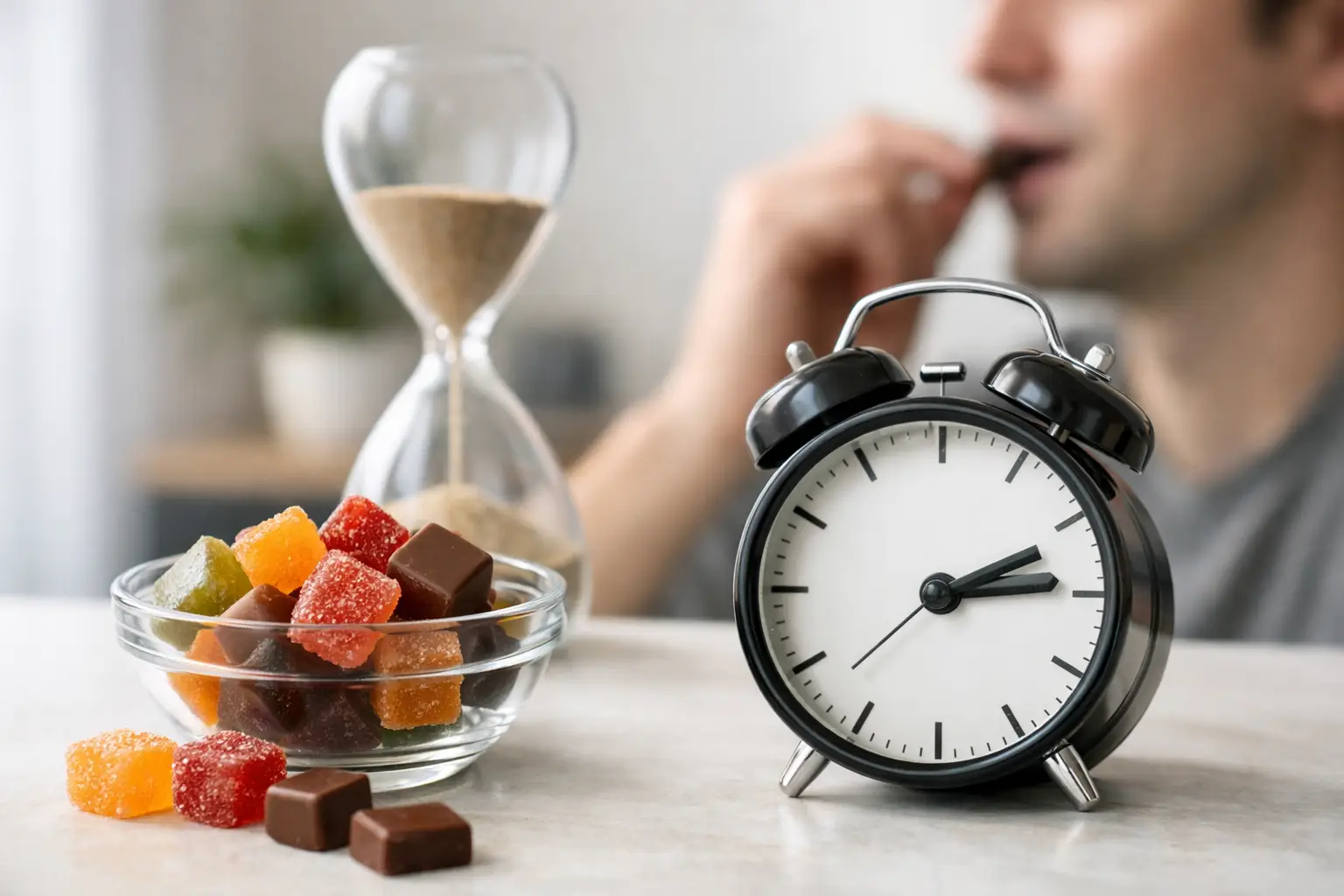
You took a chew, waited 20 minutes, and felt nothing. Then an hour later it landed all at once. That gap is exactly why edible chews onset time explained matters for anyone who wants a more controlled, repeatable experience instead of guessing and overdoing it.
Chews can feel simple on the surface. Eat one, wait, enjoy. In real use, the timing is less predictable than inhalation, and that’s where a lot of people get tripped up. With vapes, effects often show up fast. With chews, your body has more work to do before you feel anything, and the difference between “not yet” and “too much” usually comes down to patience, dosage, and product consistency.
Edible chews onset time explained: the short answer
Most edible chews begin to kick in somewhere between 30 minutes and 2 hours. For some people, it can start a little sooner. For others, especially after a large meal, it can take even longer. A common sweet spot is around 45 to 90 minutes, but that range is not a guarantee.
That variation is normal. Chews move through digestion before the active compounds are absorbed and processed. Unlike inhaled products, where effects can arrive quickly, chews depend on your stomach, your metabolism, and what else is going on in your system that day.
If you only remember one thing, remember this: slow onset does not mean weak product. It usually means your body is still processing it.
Why chews take longer than inhaled products
When you inhale, cannabinoids enter the bloodstream through the lungs, so the feedback is faster. With a chew, the product has to be eaten, broken down, absorbed through digestion, and then processed by the liver before the experience fully develops.
That extra path changes both timing and feel. Many users describe chews as taking longer to arrive but lasting longer and feeling heavier once they do. That’s why dosing discipline matters more here. If someone gets impatient and stacks another dose too soon, the second chew may start building before the first one has even fully shown up.
For experienced shoppers, this is less about theory and more about consistency. If you want reliable performance, you need a product with clearly labeled potency, lab-tested quality, and packaging that protects freshness. Clean, verified products make timing easier to read because you’re not dealing with mystery strength or uneven formulation.
What affects onset time most
The biggest factor is whether you took the chew on an empty stomach or after eating. On an empty stomach, some people notice effects sooner. After a full meal, especially a heavy one, onset can slow down. That doesn’t always reduce the overall experience, but it can delay it enough to make people think the chew is not working.
Body chemistry matters too. Metabolism, tolerance, and even stress level can shift how quickly a chew comes on. Two people can take the same amount from the same pack and still report different timing. One may feel it in 35 minutes. Another may still be waiting at the 90-minute mark.
Dosage also plays a role, though not always in the way people expect. A larger dose does not automatically mean dramatically faster onset. It may mean stronger eventual effects, but the digestive process still takes time. Product format matters as well. Some chews are designed for a more standard digestive route, while others may include ingredients that influence absorption. Even then, labels and claims should never replace common sense. The safest move is still to start low and give it time.
Edible chews onset time explained for new and experienced users
Newer users often focus on how long it takes to feel something. Experienced users usually care just as much about when the peak arrives and how long the ride lasts. Those are different questions.
Onset is the first noticeable shift. Peak is when the effects feel strongest. Duration is the full window before things taper off. With chews, onset might begin around 45 minutes, peak may not hit until later, and the full experience can last several hours. That longer arc is part of the appeal for some people, especially those who want a sustained experience without repeated use.
For lower-tolerance users, even a modest dose can feel strong once it fully develops. For higher-tolerance users, onset may feel subtler at first, which can create the false impression that another chew is needed right away. That’s where people make the classic mistake. They dose for the first 20 minutes instead of the next 2 hours.
How to avoid taking too much too soon
This is where quality-focused habits matter. Start with the labeled serving, not a guess. Then wait long enough to judge the actual result. For most users, that means holding off on any additional dose for at least 2 full hours, and in some cases longer if you’ve eaten recently.
There’s no upside in rushing an edible experience. The more measured approach usually gives better control, fewer surprises, and a smoother overall result. If you’re trying a new brand, new potency, or new flavor line, give yourself even more room. Consistent manufacturing helps, but your own response still matters.
Hydration, a comfortable setting, and realistic expectations go a long way. If you’re distracted, anxious, or mixing products without thinking through timing, it becomes harder to read what the chew is doing. Reliable experiences are rarely accidental.
Why product quality changes the experience
A lot of onset confusion is really a quality issue. If potency is inconsistent from piece to piece, if ingredients are not clearly labeled, or if the product has been stored poorly, timing can feel erratic. That’s one reason serious buyers pay attention to authenticity and verification.
Premium edible chews should deliver a consistent dose, clear labeling, and intact packaging. Those basics reduce the guesswork. They don’t eliminate personal variation, but they do make the experience more dependable. In a category where counterfeit and low-grade products still create risk, buying from a source that emphasizes lab testing, verification, and reliable fulfillment is not just a branding angle. It’s practical protection.
That’s also why experienced customers tend to stick with sellers they trust. If the goal is repeatable potency and flavor with fewer surprises, quality control matters every time.
Common timing mistakes
One of the most common mistakes is comparing a chew to a vape. They are not supposed to feel the same on the same timeline. Expecting fast feedback from a chew sets people up for impatience.
Another mistake is taking a chew right after a big meal and assuming it failed because nothing happened within 30 minutes. In many cases, it’s still on the way. The third mistake is mixing alcohol or other substances and then trying to judge the chew’s effects in real time. That can blur the experience and make dosing decisions worse, not better.
Storage gets overlooked too. Heat, moisture, and time can affect product integrity. If you want fresh flavor and more dependable performance, keep chews sealed and stored as directed.
What a realistic timeline looks like
A practical expectation looks like this: you take a chew, feel little or nothing at first, notice early effects somewhere between 30 and 90 minutes, and reach fuller intensity after that. For some users, especially after food, the first clear signs may not show up until closer to 2 hours.
That timeline is why planning matters. If you want the experience to line up with your evening, don’t take a chew at the exact moment you expect to feel it. Build in time. Give the product room to work as intended.
This matters even more with higher-potency products. Stronger options can be a great fit for experienced users who know their range, but higher potency does not remove the delayed onset. It just raises the stakes if you redose too early.
The best approach if you want consistency
The cleanest strategy is simple. Buy verified products with clear potency. Start with a measured serving. Wait at least 2 hours before deciding whether you need more. Keep your routine similar from one session to the next so you can actually learn how your body responds.
If you’re shopping for premium cannabis products and want the same quality standards across categories, CleanCarts.shop focuses on authenticity, lab-tested selection, and a more dependable customer experience from checkout to delivery. That same quality mindset matters whether you prefer inhalation or chews.
Edibles reward patience more than confidence. If you respect the timing, choose quality, and let the experience arrive on its own schedule, chews usually make a lot more sense than they do in that first impatient half hour.